Yukon Territory and western Northwest Territories, including Mackenzie Mountains and adjacent Mackenzie River Valley, with locations of all weather stations.

Performance of climate projections for Yukon and adjacent Northwest Territories.

Performance of climate projections for Yukon and adjacent Northwest Territories.

The design of infrastructure on permafrost must account for the impacts of a changing climate on ground stability. While guidelines like CSA PLUS 4011:19 provide a framework, choosing appropriate climate scenarios remains a challenge.

The study by Astrid Schetselaar, Trevor Anderson and Chris Burn reveals that observed warming in the Yukon and Northwest Territories (1991-2020) aligns with more extreme climate projections made in 2003 for the Mackenzie Gas Project.

Key takeaways for developers:

  • Consider adopting more aggressive climate change scenarios when designing permafrost foundations, as these projections have been more accurate.
  • Near-surface permafrost in southern parts of the region may become unsustainable. Thorough site investigations for thaw-stable soils are crucial.
  • Rising winter temperatures imply that the operational efficacy of thermosyphons, used to chill foundations, may be impeded.  At sites where preservation of frozen ground is essential for infrastructure integrity, the number of thermosyphons required may need to increase.

Schetselaar, A.B., Andersen, T.S., and Burn, C.R. 2023. Performance of climate projections for Yukon and adjacent Northwest Territories, 1991-2020. Arctic, 76(3). doi: 10.14430/arctic77263

Yukon Territory and western Northwest Territories, including Mackenzie Mountains and adjacent Mackenzie River Valley, with locations of all weather stations.

By Tristan MacLean, ago
A multicolored app icon with the letters S, I, K, and U beside the word Permafrost on a dark blue gradient background.

Seminar video – SIKU: the Indigenous Knowledge Social Network as a tool for Indigenous-led research and meaningful research engagement with Indigenous communities.

The NSERC PermafrostNet seminar video on SIKU is now available.

Sophie Crump presented her seminar on SIKU: the Indigenous Knowledge Social Network as a tool for Indigenous-led research and meaningful research engagement with Indigenous communities. Sophie presented examples of how SIKU is being used to document permafrost in the environment and opened up the discussion on using the platform for both knowledge sharing and monitoring of permafrost.

Two smartphones display the SIKU app. One screen shows a map with an animal sighting and a photo of people on snow with seals. The other shows a user’s posts, activity icons, and pending posts list.
By Tristan MacLean, ago

Northern Research Leadership and Equity: The Expert Panel on the Future of Arctic and Northern Research in Canada

NSERC PermafrostNet Contributes to Landmark Report on the Future of Arctic and Northern Research in Canada.

NSERC PermafrostNet is proud to have supported and contributed to a groundbreaking new report from the Council of Canadian Academies (CCA) that charts a transformational path forward for Arctic and Northern research in Canada.

Released this month, Northern Research Leadership and Equity: The Expert Panel on the Future of Arctic and Northern Research in Canada addresses longstanding systemic challenges in Arctic research and provides guidance on creating an inclusive, collaborative, effective, and world-class Arctic and Northern research system.

A Call for Transformational Change

For too long, Arctic and Northern research has been dominated by Southern researchers, institutions, and priorities, often ignoring Indigenous Peoples, their rights, cultures, and knowledge systems. The expert panel determined that true transformation requires centering Indigenous leadership, voices, and engagement at all stages of the research process.

PermafrostNet’s Role and Contributions

The CCA assessment was sponsored by a consortium of Arctic and Northern research and science organizations from across Canada, led by ArcticNet, with financial support and input from NSERC PermafrostNet and other leading northern research networks.

PermafrostNet members played critical roles in developing this important report:

  • Dr. Stephan Gruber, NSERC PermafrostNet Scientific Director and Professor at Carleton University, provided expert input to the panel, drawing on his extensive experience in Arctic research.
  • Dr. Shawn Marshall, member of NSERC PermafrostNet’s Strategy Committee, glaciologist, and Departmental Science Advisor at Environment and Climate Change Canada, served as a peer reviewer for the report.
  • Dr. Nicole Wilson, member of NSERC PermafrostNet’s Scientific Committee and Canada Research Chair in Arctic Environmental Change and Governance at the University of Manitoba, also served as a peer reviewer.
By Tristan MacLean, ago
Comparison of mountain areas with permafrost in western Canada (coloured) and European areas (grey) for mean annual air temperature and total annual precipitation at a resolution of 30 km x 30 km.

Transferring Cryosphere Knowledge between Mountains Globally: A Case Study of Western Canadian Mountains, the European Alps and the Scandes

Transferring Cryosphere Knowledge between Mountains Globally: A Case Study of Western Canadian Mountains, the European Alps and the Scandes

Most mountain permafrost research has been focussed on the small area of the European alps. This leads to the question, can you transfer cryosphere knowledge from the Scandes and Alps to Canada?

Emilie Stewart-Jones, has now developed a method for comparing regional climates at a coarse scale to highlight similarities and differences. Her paper “Transferring Cryosphere Knowledge between Mountains Globally: A Case Study of Western Canadian Mountains, the European Alps and the Scandes” published in the Journal of Alpine Research in November can now answer the question of whether we can transfer our knowledge of permafrost in one region to another.

Comparison of mountain areas with permafrost in western Canada (coloured) and European areas (grey) for mean annual air temperature and total annual precipitation at a resolution of 30 km x 30 km.

By Tristan MacLean, ago
Coverage of the ArcticDEM in the Arctic with permafrost extent.

Identifying active retrogressive thaw slumps from ArcticDEM

 Identifying active retrogressive thaw slumps from ArcticDEM

The extent of permafrost thaw in the pan-Arctic remains unknown, but remote sensing, deep learning and crowdsourcing are helping to map permafrost degradation in the landscape.

The recent study by Huang et al study provides data and serves to develop a global inventory and better understand permafrost thaw in the pan-Arctic using very high resolution remote sensing. This approach could lead to a global inventory of retrogressive thaw slumps.

Lingcao Huang, Michael J. Willis, Guiye Li, Trevor C. Lantz, Kevin Schaefer, Elizabeth Wig, Guofeng Cao, Kristy F. Tiampo, Identifying active retrogressive thaw slumps from ArcticDEM, ISPRS Journal of Photogrammetry and Remote Sensing, Volume 205, 2023, Pages 301-316, ISSN 0924-2716.

Coverage of the ArcticDEM in the Arctic with permafrost extent.

By Tristan MacLean, ago
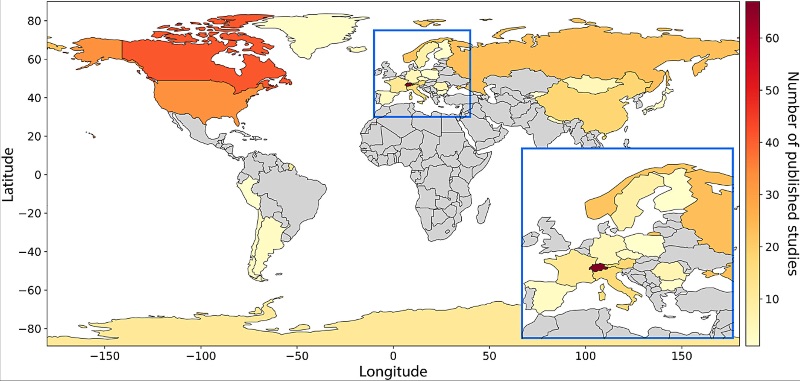
Global map summarizing locations of field sites where electrical resistivity tomography (ERT) has been used to study permafrost (2000–22) based on the literature search.

Best practices for using electrical resistivity tomography to investigate permafrost.

Best practices for using electrical resistivity tomography to investigate permafrost

A recent study by Teddi Herring suggests ways to improve how Electrical Resistivity Tomography (ERT) is used for permafrost and highlights recent advances in this approach. ERT is a technique that is incredibly useful for studying permafrost, enabling us to see how deep the permafrost layer is and identify areas with ice content.

There has been a 10-fold increase in publications of studies using ERT to analysis permafrost in the last 20 years, and though challenges remain, and there’s no single “best way” to do it yet, the study makes recommendations for conducting ERT surveys to maximize the utility of existing and future data.

Herring T,  Lewkowicz AG,  Hauck C, et al.  Best practices for using electrical resistivity tomography to investigate permafrostPermafrost and Periglac Process.  2023; 34(4): 494-512. doi:10.1002/ppp.2207

Global map summarizing locations of field sites where electrical resistivity tomography (ERT) has been used to study permafrost (2000–22) based on the literature search.

By Tristan MacLean, ago
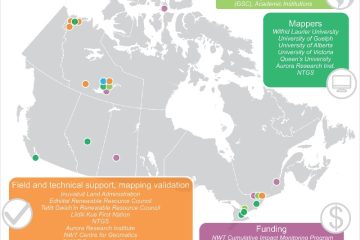
Project organization, roles and institutional involvement by location.

The Northwest Territories Thermokarst Mapping Collective: a northern-driven mapping collaborative toward understanding the effects of permafrost thaw

The Northwest Territories Thermokarst Mapping Collective: a northern-driven mapping collaborative toward understanding the effects of permafrost thaw.

A paper by the Thermokarst Mapping Collective (TMC), a research collaborative to systematically inventory indicators of permafrost thaw sensitivity by mapping and aerial assessments across the Northwest Territories (NT), Canada, has documented the first comprehensive inventory of thermokarst and thaw-sensitive terrain indicators for a 2 million km2 region of northwestern Canada.

Kokelj, S.V. et alThe Northwest Territories Thermokarst Mapping Collective: a northern-driven mapping collaborative toward understanding the effects of permafrost thawArctic Science. E First. DOI: 10.1139/as-2023-0009.

Project organization, roles and institutional involvement by location.

By Tristan MacLean, ago
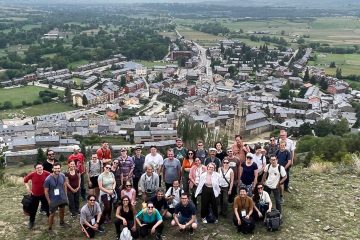
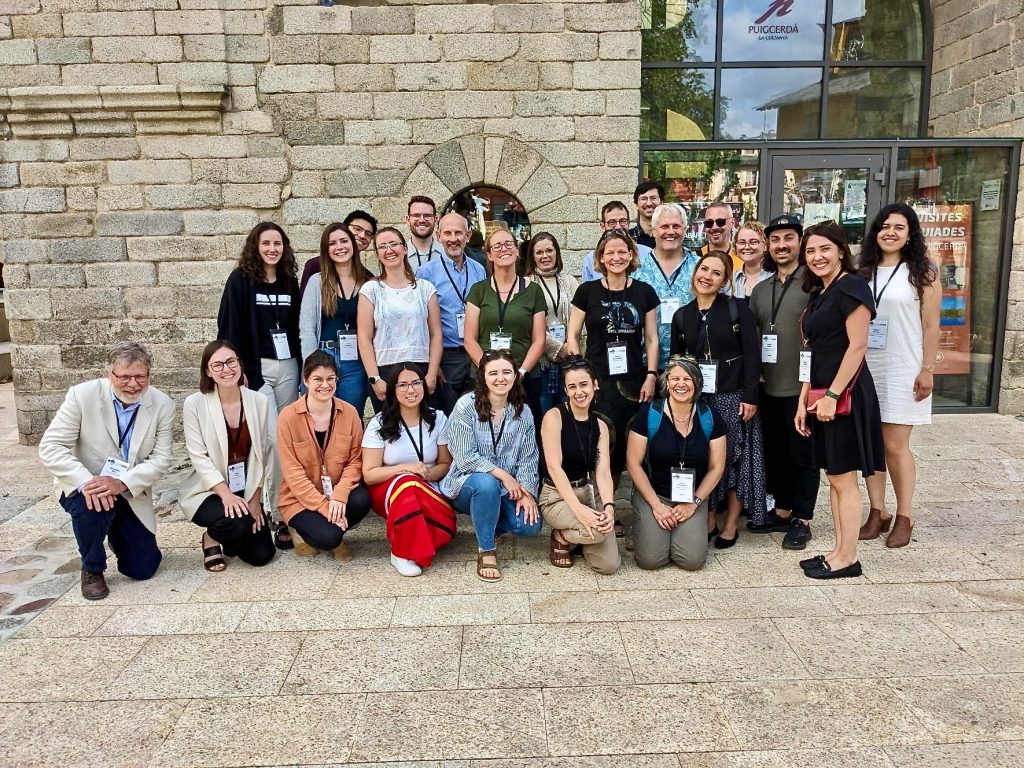
A large group of people poses on a grassy hilltop overlooking a town with many buildings, roads, and green fields, set against a backdrop of mountains and cloudy skies.

6th European Conference on Permafrost (EUCOP 2023)

Blog post by Samuel Gagnon and Pia Blake.

Members of NSERC PermafrostNet gathered in Puigcerdà, Spain, last week for the 6th European Conference on Permafrost (EUCOP 2023). The conference brought together nearly 500 permafrost scientists from all over the world and covered a wide range of permafrost topics from research to engineering and outreach. It was a real treat to have an entire week dedicated to permafrost, something that had not happened since the last EUCOP in 2018. The relatively small number of attendants combined with the proximity that a smaller town offers were the perfect ingredients to renew and create new partnerships, exchange ideas in a casual atmosphere, and create a sense of community.

During the week, scientists attended lectures, participated in topical sessions, and discussed at ‘beer, poster, and cheese’ sessions (yes, that’s the official order from the program!). The quality and variety of presentations were outstanding, and Canadian researchers once again showed the relevance of their work and their know-how to their international colleagues. Many PermafrostNet members distinguished themselves by giving exceptional talks to the assembled participants, including Tabatha Rahman (ULaval), Hannah Macdonell (UCarleton), Adam Kirkwood (ULaval), Mahya Roustaei (UAlberta), Emma Street (UVic), and Toni Lewkowicz (UOttawa), while many others gave poster presentations.

Rounding out the week was a series of day-long field excursions on a range of topics. Participants could learn about the anthropogenic history of the region, the geological history, or explore the mountain peaks surrounding Puigcerdà in the eastern Pyrenees (Cerdanya, Núria, Andorra).

The week flew by and was inspiring and motivating. Many thanks to the organisers who worked tirelessly and pulled off an amazing conference!  We look forward to welcoming all to the International Conference on Permafrost (ICOP2024) next year in Whitehorse.

In the meantime, please submit an abstract or join us at the permafrost session – Exploring the Roles of Ground Ice on Permafrost Dynamics at AGU23 on 11-15 December in San Francisco.

A group of around 25 adults pose and smile together outside a stone building with arched windows. Most wear conference name badges and casual or business attire. The atmosphere is friendly and relaxed.
By Tristan MacLean, ago
Two people riding snowmobiles on a snow-covered road lined with tall, snow-laden trees under a clear blue sky. Deep tracks and shadows are visible in the snow.

New seminar videos – Variation in the morphology of permafrost peatlands and Compacting snowbanks to lower ground temperatures.

Two new NSERC PermafrostNet seminar recordings are now available.

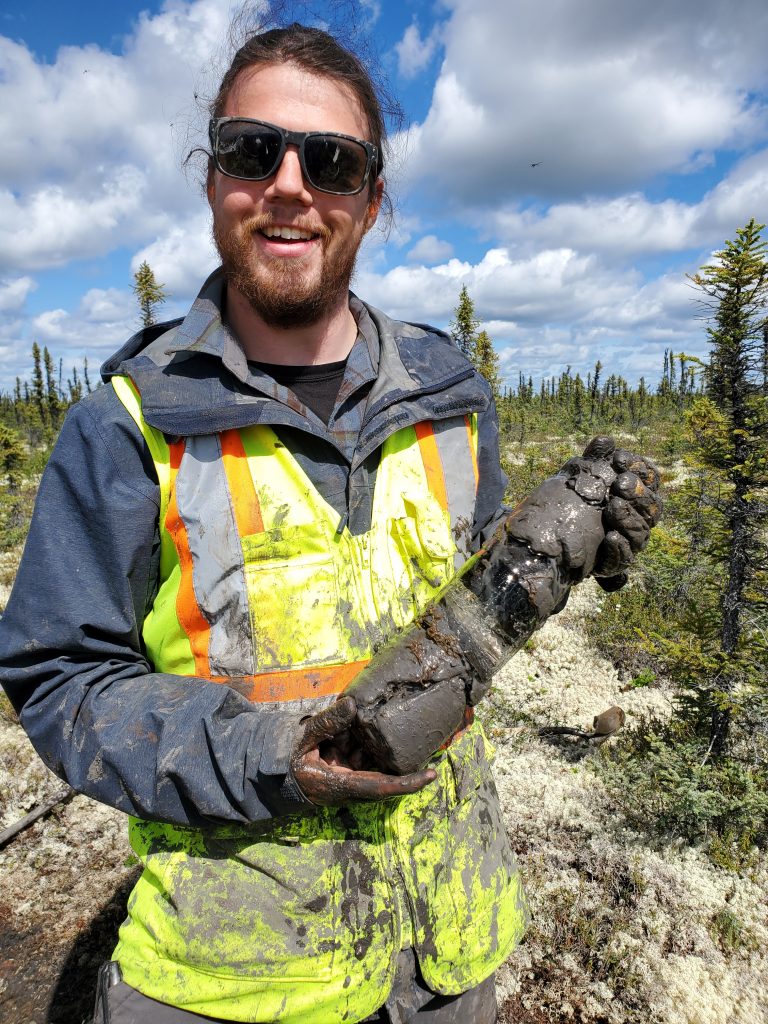
Alexandre Chiasson presented his seminar on Variation in the morphology of permafrost peatlands across the transition from continuous to discontinuous permafrost, central Mackenzie Valley.

A person wearing sunglasses and a reflective vest smiles while holding a muddy soil core sample outdoors, surrounded by trees under a partly cloudy sky.

Pat Jardine presented his seminar on Field experiments investigating snowpack compaction as a method of lowering ground temperatures.

A smiling person wearing glasses, a red baseball cap with a black and white logo, and a black jacket stands outdoors in front of a modern glass building and leafless tree.
By Tristan MacLean, ago